

DeepSeek, the Chinese artificial intelligence (AI) model that once stunned the world with its low cost and high performance, is now limiting usage because of “insufficient computing power”.
Several users have recently found that DeepSeek no longer supports long conversations that have been inactive for more than seven days, and has reduced the amount of text allowed in a single input. The topic “DeepSeek usage limit reached” began trending on Weibo on Monday (16 November). Users flooded the comments sections of DeepSeek’s official social media accounts, pleading: “Liang Wenfeng, start charging something” and “How long can you keep going without making money? How can you compete with US AI models?”
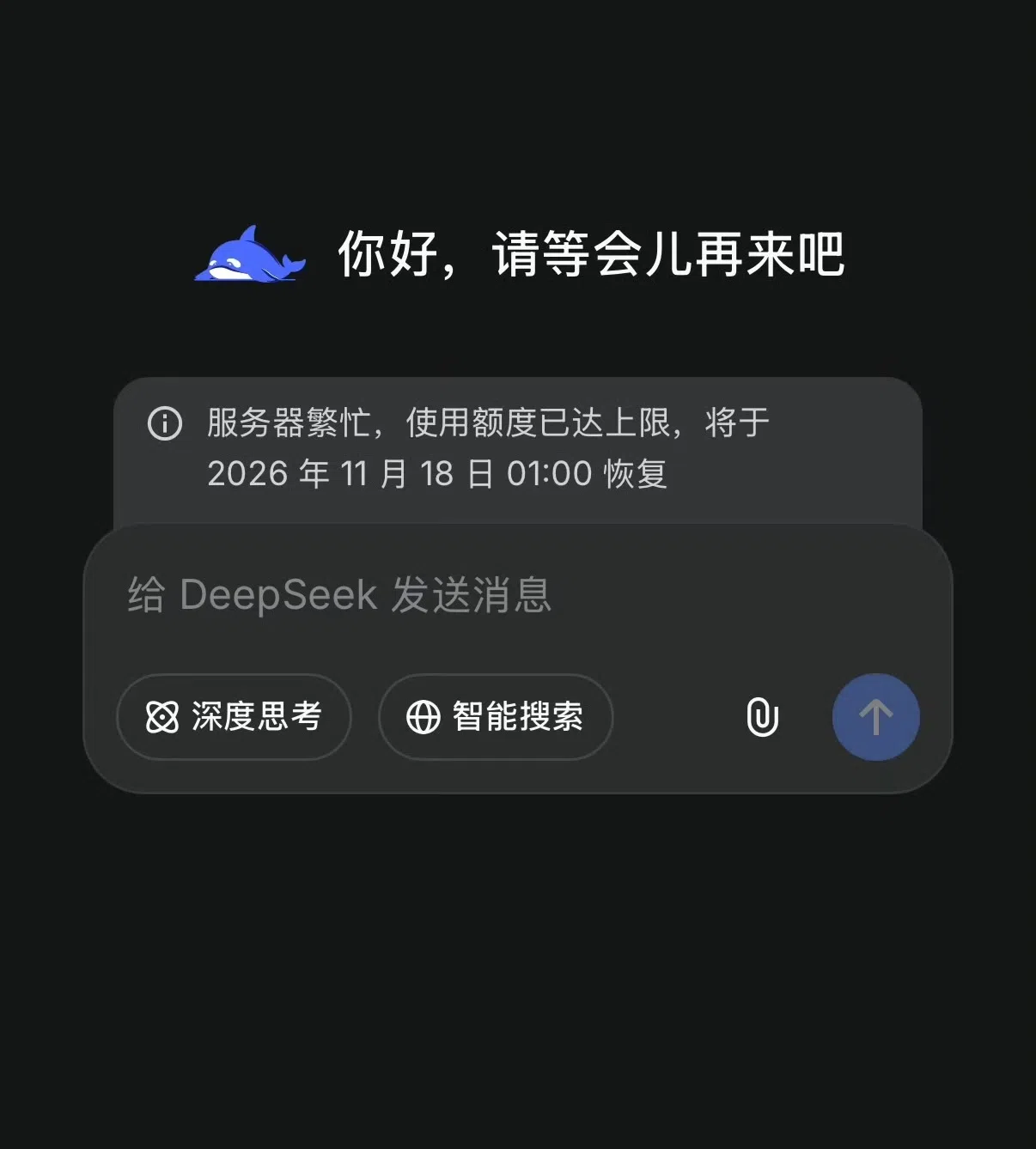
DeepSeek has experienced busy servers and service disruptions several times this year. But this time, its explicit decision to restrict usage because of “insufficient computing power” has sparked a public outcry, renewing scrutiny of Chinese AI companies’ access to computing resources and the sustainability of free services.
Meanwhile, the scandal over former Nvidia chief executive Jensen Huang’s extramarital affair has added to the uncertainty surrounding China’s AI development. Although it remains unclear whether Nvidia is implicated in espionage, the US has begun tightening exports of advanced chips and blocking Chinese companies’ access to computing power through data centres in third countries.

With Chinese AI companies also lagging well behind their US peers in monetisation, multiple anxieties are spreading among industry players and investors in China. Independent Chinese media account Xixiao Chuangke lamented that “China’s large AI models, and indeed its entire AI industry, are going through their darkest hour”. Numerous technology and innovation media outlets, including Huxiu and IT Juzi, reposted the article.
Some consider “darkest hour” an exaggeration; others call it the darkness before dawn. Tech Buzz China founder Rui Ma wrote on X: “It feels as though Chinese AI faces a darkest hour every six months. But I think these are all genuine concerns.”
The first is the fear of having no chips available.
Chinese-made chips, notably Huawei’s Ascend series, have made some breakthroughs in recent years. But training leading models still depends on Nvidia’s graphics processing units (GPUs). Technical reports for DeepSeek’s V3 and Moonshot AI’s Kimi K2 both explicitly state that they used Nvidia H800 chips.
In minutes of an investor meeting that surfaced in July this year, DeepSeek founder Liang Wenfeng also said the cost of buying a batch of Nvidia servers could be recouped in about 10 months. As long as prices remained reasonable, the company would therefore use the funds it raised to “buy as many chips as possible”.
A report by Hong Kong’s South China Morning Post (《南华早报》) in August quoted several people in China’s large-model industry as saying that leading models use Nvidia chips not just for their performance, but also for Nvidia’s CUDA software ecosystem. Migrating to Huawei’s Ascend platform could increase both the time required and costs by at least 50%.
Buying chips through third countries is no secret, but Washington is trying to close this loophole. Following the scandal over Huang’s extramarital affair, US lawmakers accelerated efforts to include three chip-related bills in the National Defense Authorization Act for fiscal year 2027: the AI Oversight Act, the Chip Security Act and the Multilateral Alignment of Technology Controls on Hardware Act, or MATCH Act.
If passed, the legislation would give the US Congress oversight of advanced chip exports, allow it to require companies to track where chips go, and push US allies to restrict exports of chipmaking equipment to China as well. Huang was one of the bills’ most prominent opponents, but his scandal has greatly reduced the likelihood that the White House will back Nvidia in a confrontation with Congress.
The second concern is that Chinese AI companies’ window for remotely renting computing power through third parties is also narrowing.
Large numbers of data centres have sprung up in Southeast Asian countries such as Malaysia and Thailand in recent years, with Alibaba and ByteDance among the major customers renting computing capacity.
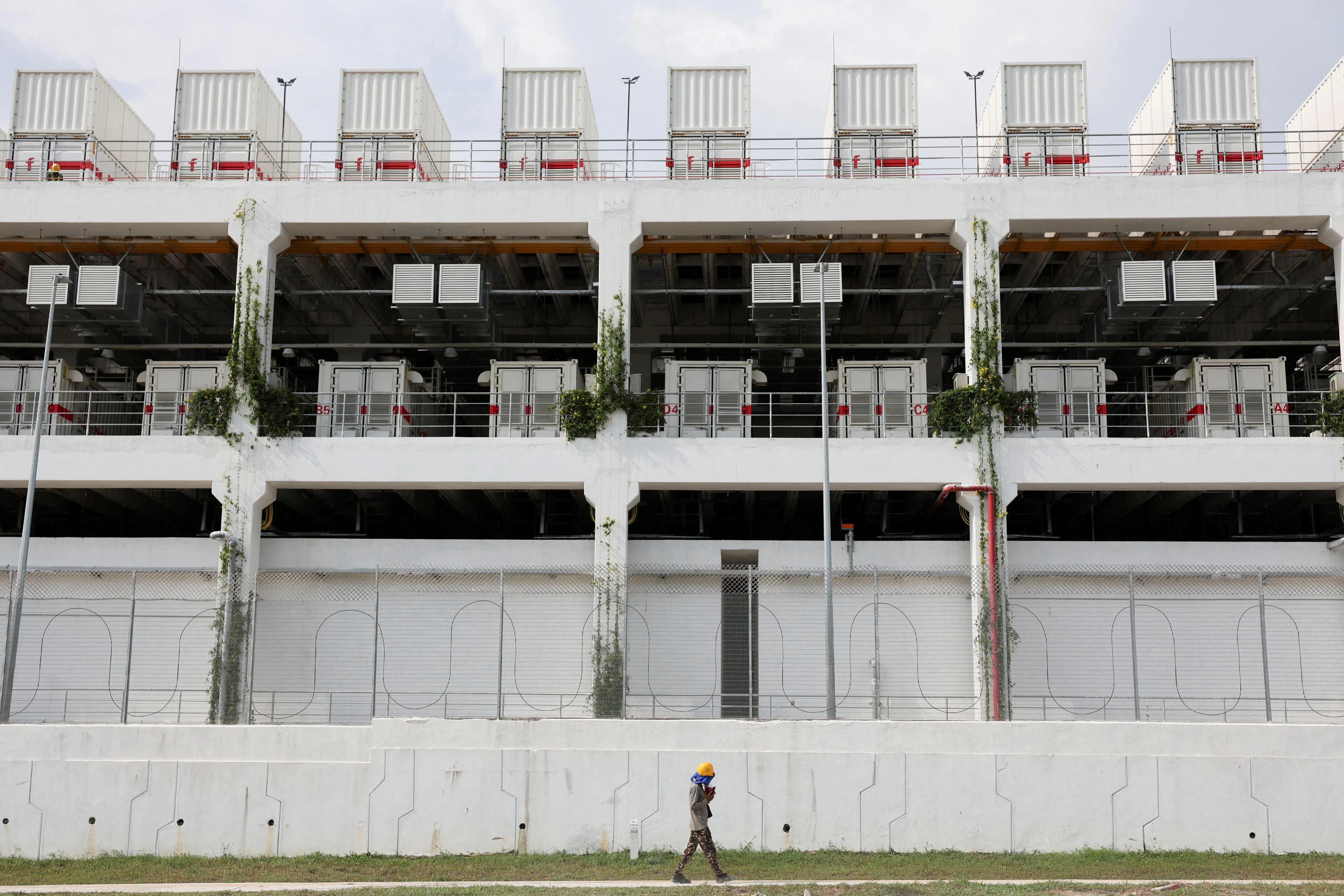
Last Thursday (12 November), Reuters cited three people familiar with the matter as saying that some Chinese companies had begun seeking to secure Nvidia computing resources at overseas data centres, amid concerns that the US would further restrict remote access to advanced chips.
On Monday (16 November), however, the US Commerce Department formally issued rules designating Singapore, Malaysia, Thailand, Indonesia and Brazil as countries at high risk of chip transshipment. Data centres in these countries must obtain US export licences to provide computing power to companies headquartered in China.
The third source of anxiety lies in the development model of China’s large AI models themselves.
Chinese models’ open-source and free-to-use approach has attracted large numbers of users. But who will pay for their ever-growing demand for computing power?
Research published in October by AI research organisation Epoch AI estimated that the combined annualised AI-related revenue of China’s six leading AI companies was only about a tenth of that of US companies OpenAI and Anthropic combined.
Listed companies Zhipu AI and MiniMax posted first-half net losses of 2 billion yuan (S$387 million) and US$358 million (S$461 million) respectively.
According to Chinese business news outlet LatePost (《晚点LatePost》), Doubao, which has as many as 419 million monthly active users, earned less than 1 million yuan a day in the first half of this year. A Tencent Research Institute survey also found that only 9.8% of Chinese AI users surveyed had ever paid for AI tools.
Commenting on this in the article, Xixiao Chuangke quipped that China’s “globally unique path into the information society has allowed us to excel in advertising, shopping, livestreaming and short dramas, while falling far behind in the digitalisation of productivity”.
The writer added wryly: “China has more than 900 million online shoppers and more than 600 million micro-drama viewers, yet US spending on software is almost six times China’s. We have never lacked digital users. What we lack is a market for productivity software that users and businesses are willing to keep paying for.”
How long can they keep going without making money?
A report published in September by US consultancy Rhodium Group said operating cash flow generated by China’s cloud computing, data centre and AI businesses was not yet sufficient to support the industry’s planned capital expenditure.
Chinese model developers as a whole face greater financial pressure than their US counterparts, the report said, citing consumers’ lower willingness to pay, fierce price competition, the widespread availability of open-source models, and rising infrastructure and computing costs.
The report also noted that major technology companies such as Alibaba and ByteDance could fund AI investment through other businesses, including e-commerce and advertising. But if their AI businesses continue to fail to generate adequate returns, the sustainability of such cross-subsidies will also be tested.
Commercial returns have yet to catch up, while the cost of closing the technology gap is rising. Xixiao Chuangke argued in the article that, as US model companies step up safeguards against “distillation”, Chinese model developers face growing restrictions on their previous practice of obtaining high-quality training signals from frontier models. This means they must bear more of the cost of collecting data and validating experiments themselves.
Meanwhile, although the launches of Chinese models such as Zhipu 5.2 and Kimi K3 this year have boosted confidence in China’s AI industry, US models are also advancing at a remarkable pace. The gap between the two countries’ frontier models has not disappeared.
In the latest edition of the Intelligence Index released by AI model benchmarking organisation Artificial Analysis in late October, US company Anthropic’s Claude Opus 5.5 scored 58 and OpenAI’s GPT-6 Astra scored 57. China’s best-performing model, Kimi K3.1 Pro, scored 46, while DeepSeek V4.1 Flash managed only 32.
For Chinese large-model companies, catching up means continually investing in research and development to narrow the technology gap. Yet to win market share, they have little choice but to attract users with low prices or even free services. How can they sustain investment, compete for market share and achieve commercial returns? That is the new challenge.
This may simply be the fate of those playing catch-up: one breakthrough raises hopes of overtaking the leaders, only for fresh challenges to follow. The “darkest hour” may not be a one-off crisis, but a recurring feature of the race to catch up.
